Reeva Steenkamp texts to Oscar Pistorius teach us about emotional abuse

REEVAtext-copy

Here are texts Reeva sent to her boyfriend three weeks before she was killed.

I’m not posting this to make a comment about the legal side of the case but rather to help us learn how to spot the signs of emotional abuse in a relationship.
In particular notice her comment, “I’m scared of you sometimes and how you snap at me and of how you will react to me. ” 

This is very important.

If you are frightened of your partner and how they might react to you then you are in an abusive relationship.

This is intimidation and is one of the main aspects of an emotionally violent relationship. 

Emotional abuse is an attack on your personality and your character in order to control you. It can be really confusing if you are in a relationship with an abuser and you might keep trying to make things work.  If you change your behaviour because you are scared of how your partner will react you are being abused.
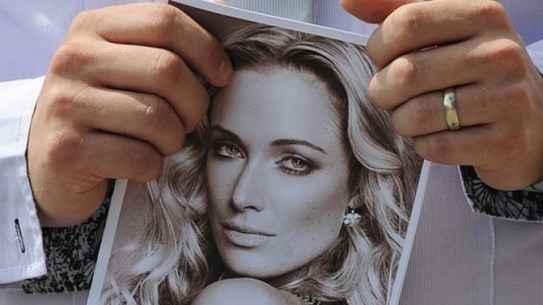
 

reeva_steenkamp_0

Here’s another text from Reeva to Oscar…

“I didn’t think you would criticize me for doing that especially not so loudly that others could hear. I might joke around and be all Tom boyish at times but I regards myself as a lady and I didn’t feel like one tonight after the way you treated me when we left. I’m a person too … I am trying my best to make you happy and I feel as thought you sometimes never are, no matter the effort I put in. I can’t be attacked by outsiders for dating you and be attacked by you — the one person I deserve protection from.”

Reeva talks of how she is trying so hard to make Oscar happy even though nothing she seems to do works. Classic signs of someone being abused are when they are trying to appease the abuser and always monitoring their own behaviour. Reeva is trying to reassure and placate her abuser. This is symptomatic of an abused partner tip toeing on eggshells and trying not to make their partner mad and keep the peace.

This is not a healthy relationship. 

BxQzEpHIUAAxiLz

Oscar was mean to his girlfriend, picks on her, puts her down -especially in front of other people. Reeva feels, “picked on … incessantly… I get snapped at and told my accents and voices are annoying … Stop chewing gum. Do this don’t do that…”

Oscar critisizes how she speaks, belittles her and tries to control her actions..

Control is the hallmark of an abuser. It is meant to make you question your own thoughts and feelings. These comments undermine her sense of self and also serve to isolate her from her friends. By creating scenes when she goes out with her friends he has started the process of isolation.

Many abusers publicly humiliate their partners, it’s a way of reducing their partners self esteem by making them feel small and humiliated. This is verbal abuse and you do not have to put up with it. This is an early red flag if you are dating an abuser. They might be charming most of the time until the mask slips down for a moment and they put you down in front of friends of family. Pay attention to this! This is the beginning of a slippery slope! If they publicly humiliate you this will not get better over time!

You might start to believe these put downs about yourself as your self esteem is gradually attacked and eroded more and more over time…  Consistent criticism from someone you love and admire might make you start working super hard to try and “improve yourself” for your partners approval as you internalise their criticism and start to blame yourself. This is a no win situation.

oscar-reeva-340x440.jpg
Sure, self improvement is important in a healthy  relationship of flexible give and take with a partner who is your EQUAL but trying to “fix” your supposedly terribly flawed self for the never ending lofty expectations of an abuser is a unbalanced game you can never win.

You will never be good enough for a person who chooses to abuse and you will lose yourself in the process of trying.

In a loving and healthy relationship your partner will want to boost you up not drag you down and put you down about petty things. If you feel pressured to fix yourself  to meet your partner’s high standards then you are not in a healthy relationship.

This is a very typical statement from an abused partner…. “But perhaps it says a lot about what’s going on here. Today was one of my best friend’s engagements and I wanted to stay longer. I was enjoying myself but it’s over now.” Reeva starts out by explaining her needs but then backs down and says it’s too late now. She’s not standing her ground or standing in her power because emotional abuse tears down that power and disempowers you. You lose the anchor of your selfhood and are left floundering.

Reeva also says that Oscar always talks about his various women he’s been with but if she mentions one long term boyfriend he gets very angry with her. She then mentions his tantrums. This double standard, possessiveness and jealousy is classic text book abusive relationship.

You can see that Oscar is very jealous and deals with that by controlling his girlfriends actions. It’s normal for people to feel a little bit jealous in a relationship however it is not normal to make their partner manage and hold up their jealousy and change their actions to deal it. If you’ve never done anything to make your partner suspect your devotion to them, never lied about seeing someone or cheated on them- then them dumping all this suspicious jealousy onto you, shaming your behaviour or attachments with friends is a big red flag for abuse.

176974426
I want to include examples now of how an abuser uses jealousy, possessiveness and isolation in an abusive relationship from the standard counselling text books to illustrate my point.

Controlling or manipulating her by controlling what she does, who she sees & talks to, what she reads, where she goes, limiting her outside involvement. 

Using jealousy to justify actions, using jealousy as a sign of love instead of insecurity. Unfounded accusations of cheating, unfaithfulness, infidelity.

Abuser treats her as if he owns her; he doesn’t want her to share her time/attention with anyone else.  Isolating the victim – controlling her schedule, limiting her involvement in activities, limiting access to telephone/internet, limiting access to enroll in certain classes, controlling her access to resources (e.g., health care, medications, car, friends, school, job, etc.).

Abuser seeks to destroy her social support system-not allowing her to spend time with family or friends, criticizing her friends, so she won’t spend time with
them, discouraging her from being close with anyone else.

Isolation is intended to make the abuser the center of the victim’s universe, as well as to limit purposefully the victim’s access to others who might attempt to help her/him escape.

(As females statistically are more likely to be victims of dating violence, these items are addressed toward female victims. Please note males can be victims of dating violence as well.)

You can forget that these texts are anything to do with Reeva or Oscar Pistorius for a minute. I’m a psychotherapist not a legal expert!

This story is all about the language that underpins emotional abuse in an intimate relationship.

Recently, I read these texts to a client who recognised the words as if they were her own.

If you have a friend who is being critisized so much by their partner that their self esteem is disappearing then please reach out for help.

If you are in a situation where someone is making you feel small, controlled, worthless and like you can’t do anything right and they critisize you for small, petty things like how you dress, housework, how you talk, how loud you laugh or you feel trapped, afraid and powerless then please get in touch.

There is a way out.
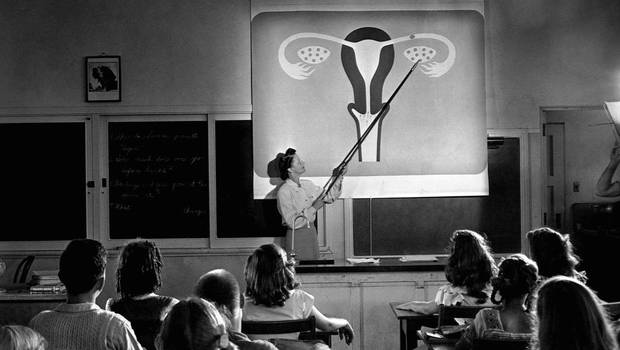


How do I teach my children about their bodies?

Dear Cat,
I need help. I’m so worried I’ll get this wrong. I want to teach my kids the right things about sex and their bodies but it’s so confusing because I was taught the wrong things when I grew up. Should I use the correct word for body parts? When I grew up I was taught pet names for my genitals and I feel sqeamish about talking about it with them. Should I keep them in the dark about the real words? How should I do this?

Worried Parent.

lf-privateparts-05lf1

Dear Worried Parent,

Thanks for reaching out. It’s normal to feel nervous about talking about sex with your children. Some parents can be so worried about getting it perfect that they say nothing at all!  It can be confusing to talk to your children about sex  but it’s important to try and be open and honest.
Talking openly about sex with your children means that your children will be more likely to come to you for help or advice. Don’t worry! It doesn’t have to be one big talk about the birds and the birds that you have to get completely perfect. Research shows that you should talk early and often with your child in lots of little conversations. Possibly first bring it up when you are driving somewhere or washing the dishes rather than sit down at a table for an “official talk.” This helps keep it informal, relaxed and doesn’t teach shame about their bodies.

The use of pet names for children’s genitals reflects our cultural discomfort about talking openly and honestly about sex.

Teaching the right words like ‘penis’ and ‘vulva’ to describe boys and girls genitals at the same time they learn about words for their elbows, knees and toes is very important for a child’s education. It normalises the words and the parts of their body. By showing your child that no part of their body is shameful or embarrassing it puts your child on the right path to developing a healthy body image.

If you must use simplified words for your children if they’re toddler age try and also use the correct terms alongside them, say when they’re in the bath for instance. What you are doing is demonstrating how you communicate about the body. This is important for children to watch and learn from. You’ll be teaching your child that all parts of their body are good and all parts have names.

You shouldn’t keep your children in the dark about proper labels for their body. Ignorance can be counter productive. If for instance, a girl experiences unwanted touching, assault or an unhealthy relationship and only has words like “cookie” for her vulva then this can make things very difficult if she asks a teacher for help. How would a teacher know what she means when she said someone wants her cookie?
The wrong words can act as a barrier for help. Ensuring children have proper words for their bodies is a protective measure. Children are more likely to ask for help if they have proper words for their “private parts” because they are equipped with the correct vocabulary to use in any situation.

Make sure you teach your children to use the word vulva for the entire outside parts of their genitals and not the simplified term ‘vagina.’ The word  vagina only refers to the inside muscular and tubular part that extends from the vulva to the cervix.

An Australian government resource recommends;
Teach kids that every part of the body has a name and its own ‘job’ to do. Answer their questions. Point out that girls and boys have lots of parts that are the same and some that are different. Boys have a penis, and girls have a vulva (‘vulva’ is the name for the female external sexual parts/genitals). For older children tell them that boys have a scrotum and testicles, and girls also have a clitoris and vagina.


Keep your answers positive, to the point and short. You might want to buy some sex education books for kids to read together.  I’ve listed some below..
Good luck!

A great book for parents- Everything You Never Wanted Your Kids to Know About Sex (But Were Afraid They’d Ask): The Secrets to Surviving Your Child’s Sexual Development from Birth to the Teens, Richardson & Schuster.

For children aged 5 to 8-

It’s Not the Stork: A Book about Girls, Boys, Babies, Bodies, Families and Friends, Robie H. Harris & Michael Emberley.

Everyone’s Got A Bottom — A Storybook For Children Aged 3–8 Years, Family Planning Queensland.

For children aged 8 to 12-

Let’s Talk about Where Babies Come From, Robie H. Harris.

Secret Boys’ Business, Fay Angelo, Heather Pritchard & Rose Stewart; illustrations Julie Davey.

Secret Girls’ Business, Fay Angelo, Heather Pritchard & Rose Stewart; illustrations Julie Davey.

For pre-teens and teens-

Let’s Talk About Sex: Growing Up, Changing Bodies, Sex and Sexual Health, Robie H. Harris.

Relationships, Sex and Other Stuff: A Few Things Teenagers Will Need to Know About Relationships, Sex and Other Stuff!, WA Department of Health


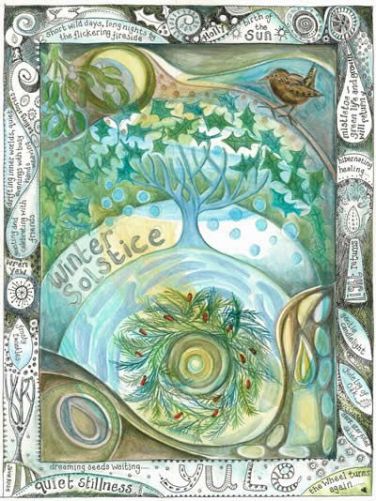
What do you need to release and surrender this Winter Solstice?

f4bd8825f6d1196476763a0dc180a783
Happy Yule (winter solstice) and a big, beautiful full moon to all my Southern Hemisphere friends!  Yule has traditionally been a very sacred time to come together around a fire and practice spiritual ceremonies to invite the sun back into the world.
How bright is your inner light shining out to the world?
What is out of balance in your life that is dimming that light?
What skills do you possess to help balance out those areas?
What loss has your psyche experienced in the past 12 months that needs to released?
What do you need to “throw out” to invite the light back into your life?
 
 
In the Druid Tradition the Winter Solstice is called Alban Arthan, a time of death and rebirth. Ceremonies called for people to “cast away, whatever impedes the appearance of light” and things would be cast down onto the dirt before the flint was struck to symbolically bring the light back.. As the longest night of the year approaches we can link our own inner journey to the journey of the seasons.
What do you need to let go of so that you can move forward into the light of a new year?
What do you need to “cast away” to allow a new cycle to begin?
 

How are you holding yourself back by still holding onto something that is unhealthy for you? This could be a relationship, a memory, a habit, a pattern of behaviour etc etc..

How can you heal this shadow and “dark side” of yourself? What do you need to stop suppressing? How can you express your shadow side in a safe and creative way  when things are difficult and the pressure builds up too much to bear?

What do you need to surrender to?

If you’ve had to see the dark side of humanity it is essential you come back to this experience and deal with it. Suppressing the memories will only lead to further suffering. Reflect on your experience and discover what you’ve learnt from it and how it has transformed you. Try writing about it. Surrender to the feelings of grief allows you to move forward. I mention this in direct reference to the Orlando mass shootings and the collective grief around the world.

What grief surrounding sexuality, relationships, feelings about your body, shame, sex, love, endings, beginnings and family do you need to let go of?

0a344a66be8e94a4eebd332460b3307b
Here’s a meditation to try for the next 24 hours..
Try repeating this to yourself, “I notice everything that has been and I let it all go…”

or “I surrender…..  I release…..  I heal….  I invite the light back into my life..”

Perhaps light some candles, breathe deeply and relax and ask yourself, “What do I need to release right now to invite the light back into my life.”  Keep your mind calm and relaxed and see what images, colours or thoughts drift into your mind’s eye.

How can we rest in the stark stillness of the season without grasping for a plan or rushing on to the next big thing?

You could even try writing onto paper the things you need to leave behind. Then throw these messages into a fire. Perhaps you’d like to write messages and wrap them around the Yule log. The Yule log is a long standing tradition in Mid Winter in many European countries and fire was symbolic of bringing new light back into the new year.
 
“In the yearly cycle it’s winter, in the daily cycle it’s nighttime, and in the monthly cycle it’s the new moon and menstruation that give us the opportunity to practice dying. However, these little deaths that compel us to grope through the dark nights of our souls are what most of us avoid the most. We’d rather just take a pill and be happy all the time than feel the searing pain of loss and of being lost. But there’s a huge folly here. If we don’t surrender and let things die away and dissolve into mystery and darkness, there’s no space from which anything new can be reborn.

..We haven’t just thumbed our noses at winter repose because of our prejudices about becoming soft and rested; we have also done this because we’re afraid to face our own shadow sides. We’re afraid of uncertainty. We don’t want to look our sadness, our anger, or our fear in the eye and really ask what each has to teach us. When we avoid facing these less savory parts of ourselves, we’re missing out on the opportunity to become who we truly are. Yes, it’s messy. Yes, it feels uncomfortable. But by going to those depths you call in the light. You heal the parts of yourself that you have never wanted to acknowledge, much less learn to love. You must become the loving mother who calls all her lost children, or the estranged parts of yourself, home.”

Sara Avant Stover


Please note– psychotherapy and art therapy uses all sorts of “roadmaps” and frames of references to help people navigate  their own path of self discovery. In this case I’ve used the seasons as symbolic metaphors to understand our inner workings. This can be relevant regardless of your spiritual, religious or aetheist beliefs.

Warning Signs you’re in an Abusive Relationship

13179209_972006019581857_4619889950380575092_n

Warning Signs


Domestic Violence is a pattern of abuse that a partner uses to establish power and control over another. Not all abusive relationships involve physical violence, however emotional abuse almost always precedes physical violence in a relationship. Emotional abuse has long-term psychological effects and can lead to low self-esteem, anxiety, depression and PTSD. Take your time dating a new partner and maintain healthy boundaries. Try to spot these signs early on.

Does your partner


Love bomb’ you and rush your relationship. Did they shower you in romance or pressure you to move in together quickly? Obviously romance is not a sign of abuse on its own, however an abusive partner needs you to trust and love them because then its much easier to control you.

Use religious or spiritual beliefs to pressure you into a relationship fast. Do they use terms such as “twin flame” or “it’s part of God’s plan” to rush through the dating phase straight into the committed phase? These terms can make you feel obliged and guilty to your abuser. Do they tell you they’ve been in love with you for years or months before you started dating? A healthy relationship takes time to build and these sentiments can be used to keep you feeling sorry for them and not leaving the relationship when you first start spotting early red flags.

  Make decisions for you without consulting you? This is a sign of things to come.

Uphold sexist ideas.They may have a very traditional and conservative view of gender or sometimes joke about you their being property. Notice how they talk about women in their life. Do they speak about their ex-girlfriends, mother or other women in their life with disdain and barely disguised venom?  (Note- I’ve written this section as if the abuser is male but abuse happens to same sex couples and to men as well.)


Tell you what to wear and what to do? Or do they constantly check up on you and your whereabouts? Exhibit possessiveness and jealousy but masquerade these as love?

Make fun of you, put down your accomplishments, tease you in a belittling way? They may insult you publicly in front of others with the effect of you becoming a shadow of your former vivacious self. Have they made nasty remarks about your body? By reducing your self esteem they will have more control over you.

 b3275cfc8ae7e77311e9414e742975b5

Overreact or make a huge deal out of very small things? As the relationship progresses youll feel reduced and diminished for every tiny mistake and youll start feeling like you cant ever do anything right.

Gaslight you to erode faith in your own memory and sanity? You feel confused and off balance and later helpless


Isolate you? Maybe they try to stop you seeing your friends or family or stop them coming to visit. They could also prevent you going to work or school or doing other activities. 


Use finances to control you? They keep you in the dark about finances or wont pay their share.


Use intimidation and anger to make you comply with their wishes? Hits walls, slams fists on objects, shoves you, grabs, stands over you, destroys your possessions, drive dangerously or do other things to scare you. This will inevitably escalate and should be taken very seriously.


Ignore you by cutting you off, refusing to communicate or using silent treatment? These are passive techniques to establish rules about when and what can be contested. This could include withholding sex as punishment.


Pressure you sexually before youre ready to engage in unsafe or unwanted sexual behavior? Do they refuse to wear a condom? Dictate what birth control methods you use? Pressure you to get pregnant before youre ready? Do you only have sex when they want to never when you want to?


Threaten to commit suicide if you want to leave the relationship. Or minimize their abuse; It wasnt that bad. Its not like I beat you up.


If you have recognized even one or two of these warning signs then I urge you to leave your relationship or prepare a getting-out-safely plan. Its not your fault if your partner abuses you. Your partner chooses to abuse. Abusers rarely change. Control  and isolation is not love. You may need help through counseling to build up your self-esteem before you have enough strength to leave.

Book a session with me if you’re worried you’re in an unhealthy relationship.


Cat O Dowd

How do we cope after the Orlando shootings?

I’m a psychotherapist with specialist expertise in gay, lesbian, bisexual and transgender issues.  I work with my clients to unpack and explore their different histories of victimisation as a result of harassment, discrimination and violence and how they can overcome these to live empowered and joyful lives.  I also work with a lot of clients who are dealing with deep trauma and specialise in using creative therapies to heal and make sense of those emotional wounds.

1465807440320

 How do we cope with such senseless violence and loss on a global level as the Orlando mass shooting at the Pulse nightclub? 

How do we deal with such hate and extreme violence?
 How do we cope with this violation of our sense of safety?

Mass shootings can cause anxiety because we are worried what could happen to us at any moment if we happen to be in the wrong place at the wrong time. They force us to confront our mortality and the shortness of life in the face of the possibility of a violent extremist turning up to where we might be.
 Imagine how this must feel for someone who may have lived their life feeling unsafe or been physically attacked because of their sexuality.

Post Orlando attacks can leave some people feeling overwhelmed with the evil in the world.  This can lead to almost a “blacking out of the sun” where negative feelings block out the sunshine and we can’t see any of the positives anymore.
You might feel as if you’re swamped with shock, sadness, fear, anger or  feel numb. This can be particularly amplified for marginalised communities. LGBT communities already suffer bullying, verbal abuse and physical violence because of their sexuality or coming out.  A recent study found that high school aged lesbian, gay and bisexual youth were more than twice as likely to have attempted suicide as their heterosexual peers.

vigilcollage1_6574dd0b410a4f50f70b26b0eaa078e5

How do we deal with these overwhelming feelings post Orlando?


Start by reaching out. I’ve written at length before how internalising and bottling up emotions only leads to more problems down the road and greater health complications. Reach out to a therapist such as myself or to friends and family to support you. Don’t try and keep it all inside. Write about your feelings in a journal as a private way of releasing these emotions.  Walk, dance, sing, move, collage- let it out.

I warmly encourage you to come and see me for therapy to deal with this grief and anxiety.

Try having a social media break for a few days to have a rest from all the distressing news and images. Over exposure to these traumatic events can actually create more stress. If you do want to keep watching the news, make sure you have breaks and do something nurturing and kind for yourself. Self care is so important!

It’s important to keep living your life how you always would. Don’t let the violence make you withdraw into yourself and not go out and be in the world as much as you normally would. Try to maintain your normal routines, eat meals at regular times, try to sleep enough, try things that can relax you and keep you calm like yoga or walks. Look after yourself.

Reverend Alisan Rowland, pastor of the LGBT-welcoming Metropolitan Community Church of New Orleans said, “We will never, ever go away. We will never be cowed.”

Remember your inner resilience and your inner strength. We each have our own inner resources to cope with tragedy. What are yours?


ct-hate-always-loses-20160613-001

The aim behind terrorist attacks is to make the broader community (and in this case the LGBT community) feel scared, ashamed and unsafe. We need to actively work hard at not letting this happen. Stand proud in your community and stand strong in solidarity with your queer brothers and sisters.
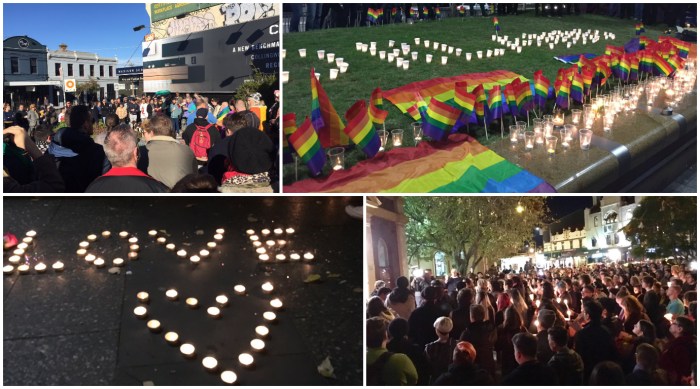
I’ve had tears running down my face as  the world has stood defiant at memorials from Paris to Sydney proclaming, “Love is Love and love is stronger than hate.”  It is such an inspiring response and a message we could keep repeating to ourselves.

The Pulse nightclub was seen as a safe haven, where members of the LGBT community could openly express their sexuality. Paul Raushenbush is a clergyman and gay writer. He wrote on his Facebook page, “Nightclubs have always been sacred spaces for queer people, places to gather and glitter away from the judging glares of society, where we could love and be loved for who we are and how we want to be..”
President Barack Obama said that, “The place where they were attacked is more than a nightclub – it is a place of solidarity and empowerment where people have come together to raise awareness, to speak their minds, and to advocate for their civil rights. ”


This shooting has tapped into this deeper communal fear about safety. The Mayor of Dallas explained that this shooting “is a tragic illustration of the legitimate safety fears that those in our LGBT community live with every day..”


Think about your safe spaces. Where is your sanctuary? Where can you go to rest, revive and connect?  Imagine it now even if you create it in your minds eye. 
Even if you need to metaphorically create a future space that you believe will exist -this will lay the foundation for joy and love overcoming hate and fear.


sydney-rainbow

Countless studies have shown that anti-gay victimisation and discrimination have been associated with mental health problems and psychological distress. Ask yourself regardless of your sexual orientation;
How can you support others in the queer community?
How can you make sure you don’t discriminate on a daily basis?
How can you help create more safe spaces where marginalised people can go to feel safe, respected and be able to reach other to others in their community?
How can you stand up for the rights of people to be able to marry the person they love regardless of their gender?

How can you 
support your local LGBT community and LGBT rights.

Some people find channeling their emotions into activism or helping charities can help them when they feel numb with grief.  If you want to donate to help the victims of the shootings. You can visit their GoFund Me page here.


Read about the victims and their lives and honour their memory.

Listen to your LGBT friends. Don’t tell them how they should feel. Be there for them.

Accept how you’re feeling right now rather than fighting it. You might be forgetful or struggling with your day to day responsibilities. Honour your emotions rather than squashing them down.

Be patient with yourself and recognise that you’re responding to a traumatic event and it’s normal and human to feel deep emotions.  Don’t try and self medicate with drugs or alcohol. Try to nurture your body as much as possible.

If you’re feeling like you are swamped with thoughts of how evil the world is I want you to proactively start focussing on the good in the world. You might want to focus on the outpouring of love and support for the victims all around the world or the messages of love conquering all.  You might want to focus on small positive things in your life everyday, whether that’s a friend you have in your life you appreciate, a beautiful place you went to once, a happy memory or even youtube videos of cute bunnies or goats. It might seem silly and you might feel guilty but it will make a difference.

If you have lost family or friends in the shootings please be kind and patient with yourself. Grief is a process not an event. Everyone copes with grief differently. Please give yourself lots and lots of time to process things and work through your emotions. Reach out to a therapist for help.


If you have a LGBT son or daughter then be supportive, talk and listen to their experiences. How parents respond to their children’s sexuality has a huge impact on their children’s mental and emotional health.

There’s so much more I could have written here.. What about you? How are you coping in a post Orlando shooting world? Have any of these helped you?

Cat O Dowd
Creative Arts Psychotherapist, Sex Therapist, Relationship Counsellor.

When he fakes orgasm.


Men fake orgasm and their partners are often none the wiser. 

Clients have told me that when they use a condom they disguise whether they’ve orgasmed and their partner has no idea that they faked it.

b9ed9e6f55feee73786da606b1973c03

A penis that is always hard sounds brilliant in theory but in reality it can cause all sorts of problems.

Take John for instance..  John can reach orgasm when he masturbates. He gets turned on with his partner but it takes him much longer and longer to reach orgasm every time they’re together.

Sometimes it’s impossible for him to ejaculate during sex that he fakes orgasm to “get it over with.”

Now John is at the point that he can’t orgasm at all during sex but he lies to his partner about it. His partner says John is more detached and distant during sex and it’s impacting their relationship in negative ways.

Delayed Ejaculation (DE) is rapidly becoming more common amongst men.


While orgasm and ejaculation isn’t necessary to have great sex, I would diagnose DE when it becomes persistent and troublesome and is causing relationship stress.

Yes there are many pathways to pleasure and orgasm but the important point here is that DE can detrimentally affect a man’s emotional wellbeing, self esteem and relationships.

11df6c440f2f876326895c004c9ff180


What causes Delayed Ejaculation?


  • DE can be caused by the side effects of SSRI anti depressants or physical problems such as diabetes, prostrate or spinal injuries.
  • Psychological stresses such as relationship problems, financial worries, anxiety and over thinking or intimacy problems can cause DE.
  • Some men might be so worried about their performance, problems at work or so emotionally disconnected from their partner they can’t connect or relax enough to climax.
  • Cultural or religious reasons. Men brought up in a culture that shames sexual pleasure can internalise that guilt and shame. This can hold them back from letting go and completely surrendering to the emotional pleasure of partnered sex or lead to developing a very unusual masturbation style.
  • Sometimes a couples mismatched desire for pregnancy can bring about DE. If there’s conflict surrounding her desire for a baby and his refusal then his mind can hold him back from ejaculating.
  • Controlling and repressing emotions. Men who can’t mentally let go and be consumed by sensual pleasure can struggle with climaxing.
  • Frequent masturbation and/or an ‘Idiosyncratic masturbatory style.’ This is when men have ‘trained’ their body to only get off on a specific pressure and rhythm that only their hand can deliver that can’t be replicated during partnered sex. Some boys can develop this throughout puberty by rushing their masturbation before they get “caught” or masturbate in a specific overly firm way to porn movies.

64cf40f2e12243395168a93b605d4072

Treatment for Delayed Ejaculation


Once medical reasons have been factored out sex therapy and relationship counselling can treat DE.

I often see both partners in my therapy rooms or via skype and prescribe them “homework” exercises to be done in the comfort of their bedroom together in their own time.

Different approaches during sex can “shake things up” by changing the mental routine. 
 I might recommend a brief masturbation break and to stay away from porn for a while. I’m not saying never look at porn again but try abstaining from watching porn for a month and see what happens to your relationship and your sexual functioning.

We also work on improving the emotional intimacy in the relationship through exploring; how the DE partner is emotionally holding back, sexual shame, guilt or fears of intimacy.
Therapy can strengthen and further bond your relationship and lead to more more intimate connections and better sex life. It takes guts to come see me but it’s worth it.

Get in touch here today if you would like to transform your intimate relationship and your sexual functioning. All sessions are confidential and I am accepting and non judgmental.

ec8daf9acb250fcda67d3def73f40294

This was published as a column in Ciao Magazine. Art by Keith Haring, Peter Hujar,  Sarah Lucas, Manuel Esthaem, Caravaggio, Luke Hillestad..

Long life loving. How a good sex life can add years to our life.

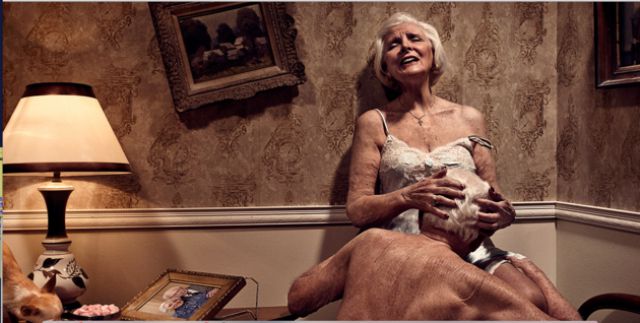
“No one has sex over 35! Everyone knows that!” An elderly gentleman told me recently. I blinked and looked to see if he was joking but he wasn’t! No one else in the room laughed, it was accepted point-blank. Sex was only for the young apparently!


seniorraunch

Hang on! Sexual satisfaction is essential for physical and mental health of any adult age. Intimacy is a natural human need and strengthens relationships. Expressing our sexuality is a basic human right.

Let’s clear up this ageist myth. 75 per cent of adults aged 58 to 85 said that satisfactory sex is essential to maintaining a relationship in a recent study. Over half the men and women had been sexually active more than once a month.

STI’s and HIV is rising amongst the over 60s population every year. Safe sex health campaigns mistakenly only target young people. This is where public health fails our baby boomers. Staff at nursing homes often aren’t trained to deal with sexually active residents.

_74486890_streetart624

Our society has ingrained this myth of the asexual older person to such an extent that over half of actively sexual elderly people didn’t think it was “proper” for them to be sexually active in a Finnish study. Information on elderly sexuality in sex education in schools could destroy this taboo surrounding sex and old age.

If we care about the welfare of our ageing population then we must boldly put their sexual health on the table. Australia is facing complex challenges with an ageing population and I’ve read countless general health studies where sexual health consistently gets excluded. Some Australian studies of our sexually active population cut the age range for participants off at 50!

By omitting this important aspect of physical and emotional health, we’re saying the sexuality of ageing adults isn’t important! However a good sex life can add years to our life.

Sometimes couples can get embarrassed and sex can stop. This doesn’t have to be permanent. Don’t be scared to come see a sex therapist such as myself for help if you’re struggling. Professional help can reignite your sex life. Sex at 70 might not be the same as when you were 20, but this chapter of your life can usher in new and heightened explorations of your sensual side.

b2c72d29c9c04208ad54a80a80a70c8e

Many older people have more exciting sex lives than when they were younger. They have more time, less interruptions from kids or work, more privacy and self-confidence. Their partnership may have deepened or they might be relishing online dating.

Try accepting the normal changes that happen to your body as you age. Let go of expectations about sex and stop comparing yourself to your younger self. Communicate your fears with your partner. Be honest, open and playful. Expand your definition of sex as more than just intercourse. Sex can be whatever you want it to be. Touching, kissing, sensual massage, mutual masturbation. Remember not all intimacy has to lead to intercourse.

 Life can be sensual into your 80s.

Get in touch with here to find out how. I see clients in my clinic near Central train station in Sydney and via skype.

This blog first appeared as my April column in Ciao magazine.
Top photography by Jean Malek..

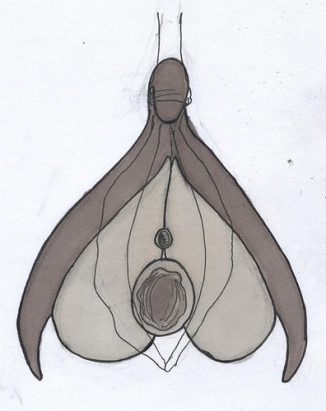
The internal clitoris

Internal Clitoris

The clitoris is the only human organ whose sole function is sexual pleasure.

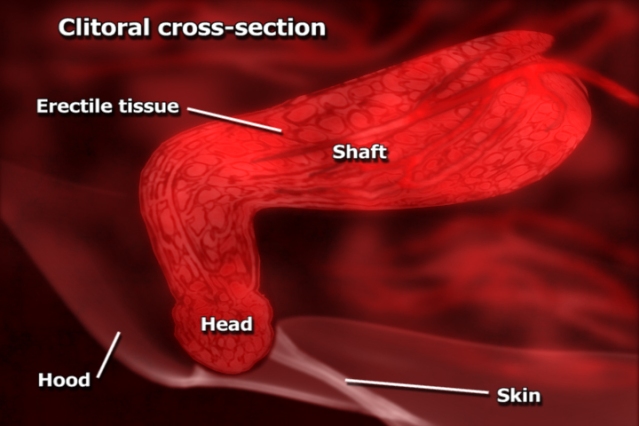
Most people think the clitoris is just a small “knob” at the top of the lips under the hood. This “glans” has 8,000 sensory nerve endings -that’s more than double the nerve endings in the glans of the penis and more than any other area on our body!

The clitoris interacts with over 15,000 nerve endings over the whole pelvic region. It’s made up of the same erectile tissue as the penis glans and engorges with blood upon arousal. However telling women that their clitoris is nothing more than a “bean” is like telling men their genitals are nothing more than the head of their penis. The glans is only the tip of the iceberg!


Internal Clitoris

In 1998 Australian Urologist, Helen O’Connell, showed us the worlds first clearest imaging of the internal clitoris. O’Connell was frustrated with the vast amount of medical information on male genitals and the scarce information on female genitalia functioning.

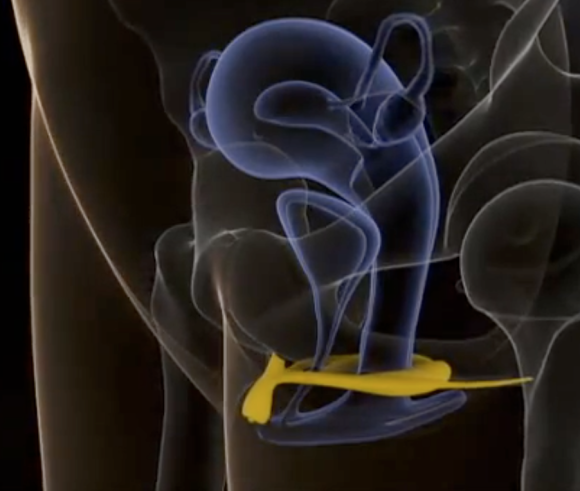
O’Connell discovered the clitoris glans is connected to an internal clitoris shaft, which is made up of two corpora cavernosa. During clitoral erection, these 3 ½ inches long and 2 ½ inches wide structures engorge with blood and “embrace” the vagina. So you’re actually stimulating the internal clitoris when you are stimulating inside the vagina.


The Internal Clitoris


The internal clitoris also has two wishbone shaped crura which stretch toward the spine when erect. It’s much more complex than we imagined!
O’Connell says, “The vaginal wall is, in fact, the clitoris. If you lift the skin off the vagina on the side walls, you get the bulbs of the clitoris – triangular, crescental masses of erectile tissue.”


clitoris

It wasn’t until 2009 that researchers in France -Dr. Odile Buisson and Dr. Pierre Foldès- completed the worlds first complete 3-D sonography of the aroused clitoris. It is very telling that they had to self fund their research.

Foldès performs reconstructive surgery on women who’ve suffered genital mutilation in an effort to restore their sexual sensitivity. Foldès was dumbfounded by how little research has been done about the clitoris and its functions, when he found thousands of extensive and well funded studies into the penis and surgical procedures.

“When I returned to France to treat genital mutilation, I was amazed that they were never tried. The medical literature tells us the truth about our contempt for women. For three centuries, there are thousands of references to penile surgery, nothing on the clitoris, except for some cancers or dermatology -and nothing to restore its sensitivity. The very existence of an organ of pleasure is denied, medically. Today, if you look at the anatomy books that all surgeons have, you will find two pages above. There is a real intellectual excision. “


I’m disappointed by the lack of attention given to the clitoris. Medical textbooks simplified the clitoris to a small nub and in the 1940’s it was erased from anatomy diagrams altogether! It is an injustice to deny this epicentre of female sexual pleasure.

Normal Barbie, meet Normal Ken!

412

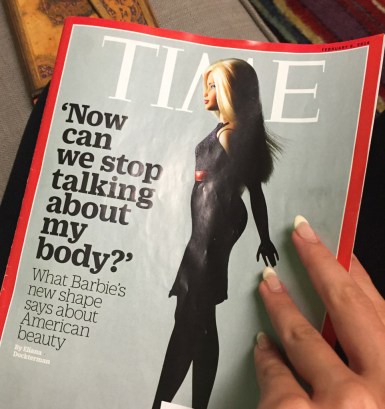
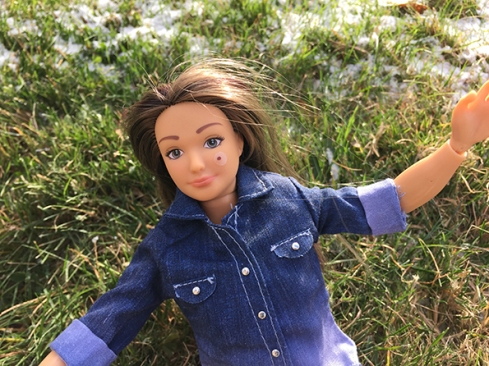
You might remember back in 2013 when artist and researcher Nickolay Lamm created a Barbie type of doll with the measurements of the average 19-year-old woman. The images of his new Barbie doll went viral, influenced the toy industry and spearheaded a crowd sourced campaign that raised over $500,000 to manufacture thousands of dolls.
Lamm was frustrated with Barbie’s highly unrealistic proportions when he went to buy a doll for his niece. He couldn’t believe that there still wasn’t a doll with more average proportions in this day and age.

12783561_10205966908032501_4559868796172333988_o-1-962x1024
Lamm has just created a pack of ‘flawed’ stickers of cellulite, stretch marks, acne, moles, freckles and tattoos that the children can stick on the doll’s body. He’s trying to show children that a normal girl has flaws, it doesn’t make her less attractive and it means she’s out enjoying life.

images

“I feel that, right now, dolls are very ‘perfect’ looking, when, in real life, few of us have perfect skin.. So, why not give dolls a ‘real treatment?’ Things like acne, stretch marks, and cellulite are a natural part of who we are.”

stretch_marks.jpg.CROP.promo-mediumlarge

Stretch marks often found on the found on the breasts, abdomen, hips, and thighs and between 50 to 90 percent of women will develop them.  Well over 90  percent of women have cellulite on their bodies.

LammilyAverageBarbie-595x450

Now Lamm has created a Lammily man based on the dimensions of an average 19 year old man.  It doesn’t have defined muscles and or an obvious six-pack  like some action figures do. Lamm hopes his doll will promote a healthy body image for children and redefine what it means to be a man. How do you define a healthy masculinity and what do you think it means to be a man?


content-1

“I feel that the media promotes a very ‘macho’ image for guys, which promotes a culture of sexism at the same time.  By making a realistic boy doll, I feel it can not only start a conversation about what it means to be a healthy man, but also lead to a more ‘real’ image which helps everyone. Let’s continue to support healthy bodies and minds.”

621d75caf6c606d0d3825881fb4dc3cb
Ken doll from the 1980’s

Lamm hopes his dolls will  show boys that real is beautiful too. His website explains,
“(we are) re-innovating the idea of what a physical “idol” can and should be, encouraging parents and children to challenge the way they think of normative body image and, in the process, have largely influenced an entire toy industry.”

Ken-and-Lammily-706x1024
The Ken doll on the left and the Normal Ken on the right

Here’s some questions for you to ponder..

What societal pressures did you feel when you were growing up about how your body should look?

Did you compare your body to dolls, movie stars or models?

How do you feel better about your body when you’re not feeling good about it?
How do you look after your body?

What have others said about your body that’s impacted your self esteem?

What did you learn about your body growing up? Did you learn that it was a beautiful thing or a dirty shameful thing to be hidden?

What messages about your body did you learn from your community, your family, friends, religion and wider culture?
How do your feelings about your body influence your sexual and intimate relations? Does it impact how you go about finding a lover or instigating a sexual experience with your partner?
Are you comfortable naked?
How do you feel about your body?

Get in touch today if you’d like to overcome your body issues and enjoy intimacy more.

Love your Cunt

Definition of cunt in English:

noun

vulgar slang

A woman’s genitals.
An unpleasant or stupid person.
samtaylorwood


Can we reclaim the word cunt? Cunt is considered the most offensive word in the English language. Cunt was a cheeky old Anglo Saxon word used to describe female genitalia and pleasure. In 1230 you could walk down “Gropecunt Lane” in London’s red light district.

Cunt is a powerful word that got turned into something nasty as female pleasure became something to be feared and controlled. In 1785 the Dictionary of the Vulgar Tongue defined “cunt” as “a nasty name for a nasty thing.”


4b488f3c791e178a194d82620c45621b

What does it say about what our culture thinks about female sexuality if the worst word you can insult someone with is female genitalia? What does it say about our gender relations?

Today we misname all the outer female genitalia by the polite and clinical word “vagina.” The original latin meaning for vagina was a passive sheath for a sword. Vagina only refers to the birth canal not the clitoris, foreskin, inner or outer lips.  It is only one of our sexual organs not all of them.

It is ridiculous that we’re still so lacking in everyday vocabulary for the vulva. It is challenging to try to reclaim the word “pussy” and “cunt” when they are so often used as terms of abuse.  If someone is called a “pussy”  it means they’re cowardly, weak, or easily tired. The Collins Dictionary says pussy means: “(taboo, slang) an ineffectual or timid person.” It’s particularly used as a term to denigrate men as feeble, timid and ineffectual. Sayings like “pussy whipped” are used to put down a man that is supposedly controlled by or submissive to his girlfriend or wife.
The correct term for all the female external genitalia is vulva but it doesn’t refer to any internal parts like vagina. Cunt is the only word we can use for the whole of the female genitalia.


267aa33abe9089f4b4198919a51a30e1

Cunt is a strong, active and sexually potent word.

What words do you use to describe the female sex organs? Do you use passive slang words like “hole” or “gash” that talk about having something done to it or it being penetrated? Studies have shown many people think sex is something that is “done to women.” Sadly our sex education for children is so inadequate that many use porn as sex ed. This can lead to confused ideas about sex and assumptions that the woman is a passive recipient. Porn is a performance and a fantasy. We don’t teach our children the critical skills to deal with watching porn. Children don’t realise that what someone wants to watch isn’t necessarily what they want to do when it comes to porn and sex.

Over the past few centuries the cunt and its receptive qualities became one and the same with passivity. This is a sad correlation. Think of how the act of eating is receptive but there’s nothing passive about the mouth and eating. The cunt is the same.

331759f78f59735cf76a2f93abfab1e7


Our cultural narrative have misrepresented female sexuality as passive and docile but in reality women have unlimited orgasmic capacity that can often far outweigh men’s orgasmic potential. Humans are a very hyper-sexual species compared to other animals that only mate when the female is fertile. The only other animals that mate all cycle long like us are are our closest relatives. Bonobo female primates have insatiable sexual desires who mate with many males and females. The female primates libidio and orgasmic capacity outmatches any male primate.

Far from being a passive sheath for a sword, vaginas are active self cleaning organs with strong muscles that can clutch around a finger, penis or dildo and undulate around it. During orgasms the cervix dips down and “swallows” sperm.
 Vaginal orgasmic contractions can push out the sperm from one man and suck in another. The ovum actively “stretches” out and envelopes hesitant sperm. When women are fertile and ovulating, research has shown that they are more confident, competitive, their libido is higher, they wear brighter coloured clothes and smell more attractive to potential mates.

 
4e6c908a2104e811e13ea601c02557e2


My school sex education only taught me about a passive vagina waiting to have a penis thrust in and out of it to deposit sperm!

However strong cunt muscles can “milk,” “suck the penis” inside, push it out, pulse around it, clench around it and actively create heightened pleasure for their partner and increase the intensity of their own orgasms.
The more we love our bodies, the less performance anxiety we can feel and the better sex, intimacy, connection and orgasms we can have.

As Germaine Greer said back in 1973, “Lady love your cunt!”

If you’d like to learn more about loving your body, increasing your sexual and orgasmic capacity and reducing performance anxiety please get in touch today for a confidential appointment.